—Initiative for Restarting Campus Observatory Domes
Campus Observatory Joint Observation Network Plan
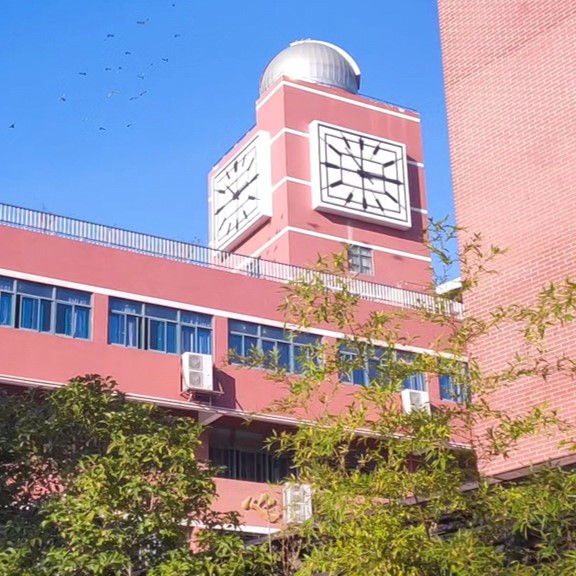
From the end of the last century to the beginning of this century, education system reforms promoted the vigorous development of campus observatory construction nationwide. In recent years, the craze for astronomy education has resurfaced, and public enthusiasm for astronomy continues to rise, bringing campus observatory domes back into focus. Many secondary schools in Shanghai and across the country have built observatory dome facilities as key venues for stimulating students' scientific interest and cultivating research literacy.
However, many campus observatories are currently idle for long periods due to lack of funds, poor maintenance, and mismanagement, making it difficult to realize their intended value. According to a preliminary investigation by the Union, more than half of the campus observatories in many key and specialized high schools in the city are in a state of disuse.
Based on the investigation, seven common reasons for the abandonment of campus observatories have been summarized:
- 1. Lack of school funding, making it difficult to improve or maintain observatory facilities, including purchasing telescope equipment;
- 2. Lack of professional maintenance methods and personnel for observatory facilities;
- 3. School concerns regarding student safety and the storage of equipment within the observatory;
- 4. Schools taking a conservative attitude toward astronomy education due to academic pressure;
- 5. Astronomical observations often need to be conducted at night, affecting students' daily schedules;
- 6. Imbalance in astronomy resource distribution: some schools have observatory facilities but lack resources or student enthusiasts, while others have the opposite;
- 7. Lack of sustainable astronomy projects to support the continuous operation of the observatory.
With the increasing emphasis on quality education, the fourth issue is gradually improving, but the remaining problems still hinder the restart of campus observatories.
To this end, we propose the establishment of a Campus Observatory Joint Observation Network covering multiple schools to support observation tasks such as variable star monitoring, meteor showers, and certain celestial events. If this concept is realized, it will inject new vitality into the reuse of campus observatories, fully leveraging their potential in science education and public science popularization, allowing the silent domes to rotate once again.
The main working method of the joint observation network is: transforming campus observatories into modern amateur automated remote observatories and connecting them to the joint observation network to form a regional astronomical data sharing mechanism. In this way, schools without observatory facilities can obtain astronomical observation data, and schools lacking astronomical resources can obtain professional astronomical guidance and maintenance methods. After joining the joint observation network, schools will cooperate through division of labor and share various astronomical resources.
This concept has many advantages:
- Effectively alleviates the imbalance of astronomical resources within the region;
- Provides stable support for long-term observatory use;
- Remote observatories and joint data sharing improve safety and address the inconvenience of nighttime observation;
- Stimulates students' interest in astronomical research and cultivates scientific literacy;
- Assists in advancing long-term monitoring of astronomical targets.
Furthermore, some local teachers and students are exploring DIY Radio Telescope Joint Observations. Based on this, we can gradually expand the collaboration mechanism to build a multi-modal campus observation system based on both optical and radio astronomy.
Of course, this concept faces challenges such as inter-school contact, resource sharing, funding sources, and division of labor, and the plan itself needs to be continuously refined through practice.
Currently, we have launched restart efforts in some schools and will discuss collaboration possibilities at the upcoming 2025 Union Member Representative Assembly. We look forward to more schools joining us and welcome suggestions and guidance from all parties. (Our email: s4au_official@163.com)
— Shanghai Secondary School Student Astronomy Union (S4AU)
July 2025